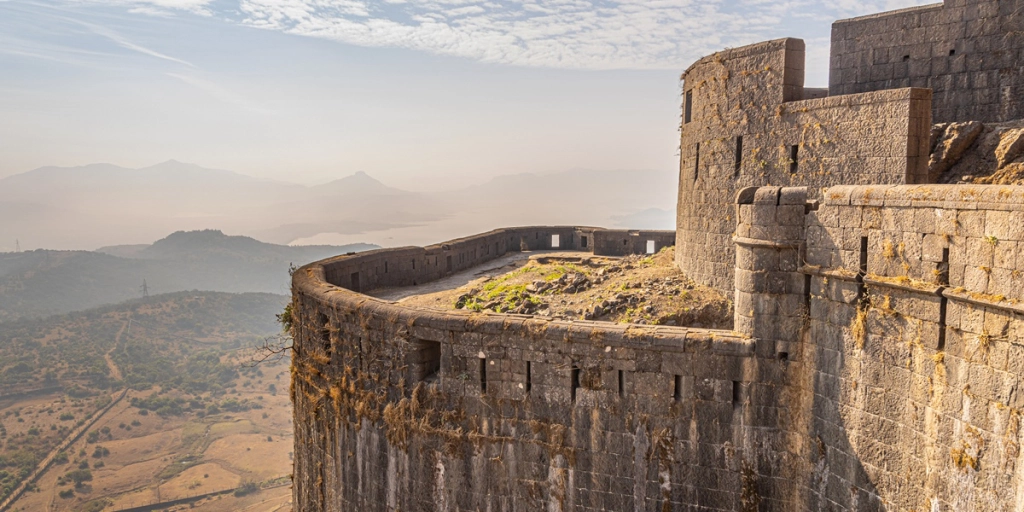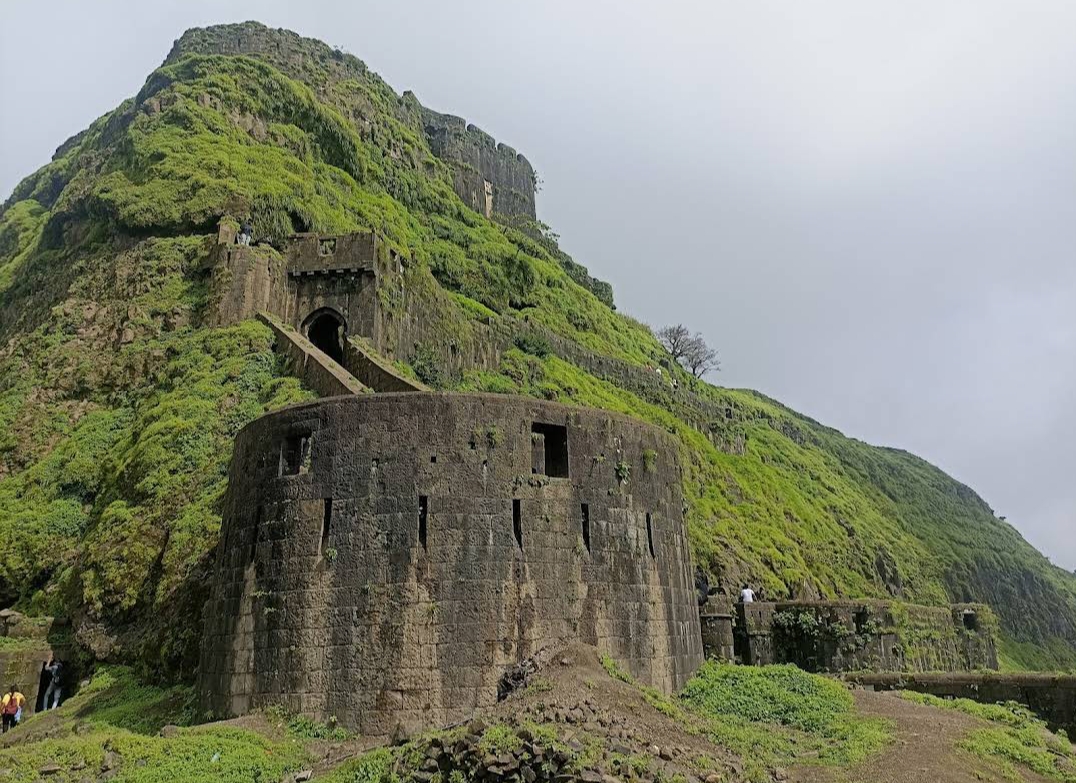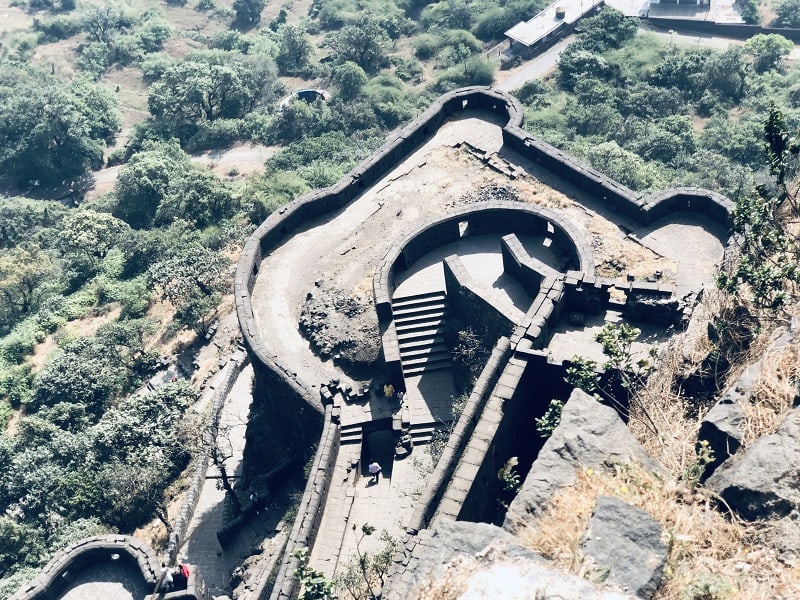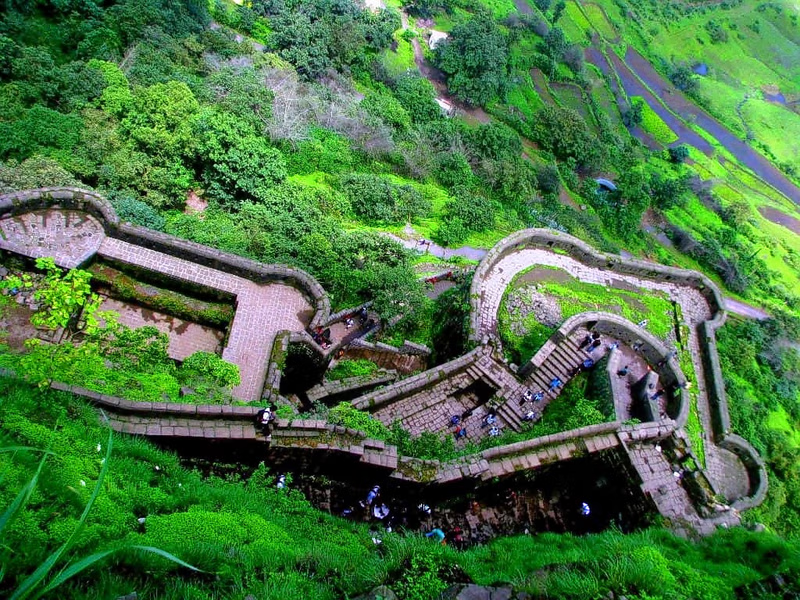
Lohagad Fort is a historic hill fort located near Lonavala in Maharashtra, India. Built during the reign of the Maratha Empire, it stands at an elevation of about 1,033 meters (3,389 feet) and overlooks the lush Sahyadri mountain ranges. The fort was strategically important, controlling trade routes between the Deccan Plateau and the coastal region of Konkan. Constructed in traditional Maratha style, Lohagad features robust fortifications, four large gates, and various structures inside the fort, including water tanks and a small temple. The fort has a rich history, being used by several dynasties before being captured and restored by Chhatrapati Shivaji Maharaj in the 17th century. Lohagad is famous for its scenic beauty and trekking routes, making it a popular tourist destination.
Lohagad Fort is a hill fort located near Lonavala in Maharashtra, India. Its history dates back to the Satavahana period, but it became more prominent during the reign of the Marathas. The fort played a significant role during Chhatrapati Shivaji Maharaj's empire in the 17th century, who captured it from the Mughals in 1648. However, it was briefly taken by the Mughals before Shivaji recaptured it in 1670 and used it to store the treasury from his campaigns. Built in traditional Maratha style, the fort has strong stone walls and four major gates – Ganesh Darwaja, Narayan Darwaja, Hanuman Darwaja, and Maha Darwaja – each featuring distinct architecture and strategic design. Lohagad was strategically located to guard the trade routes between the Konkan coast and the Deccan plateau. The fort also holds significance during the Peshwa era, and it was briefly used by Nana Phadnavis, a prominent statesman of the Maratha Empire, for keeping his treasures. Today, Lohagad is a popular trekking destination known for its scenic views and historical significance, offering glimpses into Maharashtra's rich history.
Lohagad Fort is located in the Western Ghats, near the hill station of Lonavala in Maharashtra, India. It sits atop a high ridge, approximately 1,033 meters (3,389 feet) above sea level, and overlooks the lush green valleys of the Sahyadri range. The fort is strategically placed between the Konkan coast and the Deccan plateau, making it an important stronghold for controlling trade routes in ancient times. The region around Lohagad is composed of rugged terrain with steep hills and deep valleys. The fort itself is perched on a narrow spur, surrounded by dense forests, with its cliffs offering natural defense. During the monsoon season, the area becomes lush with vegetation, and the fort's surroundings are often shrouded in mist, adding to its scenic beauty. Lohagad is accessible via a steep trail and stairs carved into the rocky hillsides, which rise dramatically from the base. The fort is built on basalt rock formations, common to the Western Ghats, and overlooks nearby lakes and villages. Seasonal streams flow down the slopes, especially during the monsoons, making the terrain both challenging and picturesque for trekkers.